



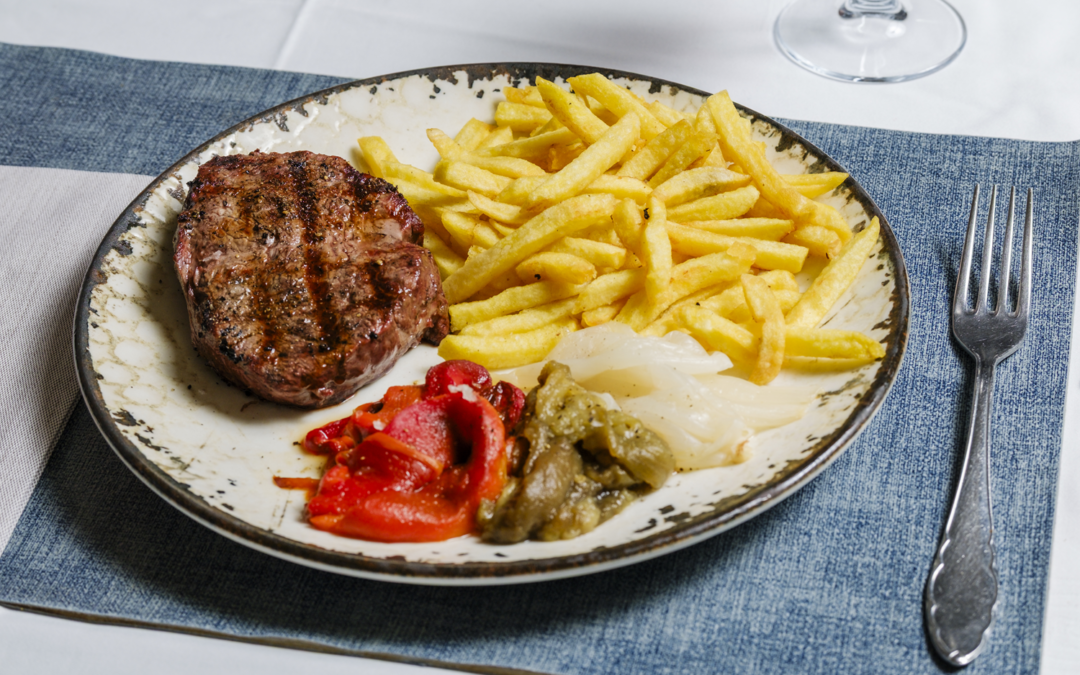
Discovering the Vall de Camprodon also means sitting down at the table. The cuisine of this part of the Pyrenees is closely linked to livestock farming, mountain produce, local crops and a culinary tradition that remains very much alive in the restaurants of the region.
The Ripollès is home to a wide variety of local food products, from meat and cured meats to potatoes, cheese, honey and traditional baked goods. Many of them are part of a way of cooking based on local produce and the rhythm of the seasons.
If you are wondering what to eat in the Vall de Camprodon, here are some of the products and flavours that best represent the area and offer another way to discover the region through its gastronomy.
| Product | What makes it distinctive | Best enjoyed in |
| Vall de Camprodon trumfa | Mountain-grown potato | Side dishes and traditional cooking |
| Ripollès mountain foal | Meat linked to mountain livestock farming | Local cuisine |
| Ripollès beef | Locally raised meat | Meat dishes |
| Ripollès lamb and kid goat | Meats rooted in the area’s farming tradition | Mountain cuisine |
| Ripollès cured meats | Traditional charcuterie | Appetisers and local dishes |
1. Vall de Camprodon trumfa, one of the products most closely linked to the area
In the Vall de Camprodon, the potato is traditionally known as trumfa and is one of the products most closely associated with local mountain agriculture.
The Ripollès tourism board includes the Vall de Camprodon potato among the region’s characteristic food products, alongside different meats, cured meats, honey, eggs, dairy products and other local produce.
Its place in the cuisine of the Vall reflects a simple style of mountain cooking in which locally sourced ingredients play a central role.
At Restaurant Calitxó, for example, organic trumfes from Molló are among the local ingredients featured in its cuisine.
How to try it: look out for side dishes and seasonal recipes where locally grown potatoes take centre stage.
2. Ripollès mountain foal, a meat rooted in Pyrenean livestock farming
Another characteristic product of the region is Ripollès mountain foal.
Livestock farming has shaped both the landscape and the economy of this part of the Pyrenees for generations. Cattle, sheep, goats and mares graze across the region’s natural areas, producing foods that are closely linked to the land.
Foal also has a long-standing place in the gastronomy of the Vall de Camprodon. For many years, it featured prominently in gastronomic initiatives in the valley, reflecting its close connection with local livestock farming and cuisine.
Restaurant Calitxó specifically highlights Vall de Camprodon foal among the local products on which its cuisine is based.
How to try it: check which dishes are available during your stay, as the restaurant’s offering changes with the seasons.
3. Ripollès beef, a product of a livestock-farming region
Ripollès beef is another recognised product within the area’s local food offering.
Its connection to the region is once again rooted in the mountain landscape and local livestock farming, where herds are a familiar part of the rural environment.
In the kitchen, it lends itself to meat dishes that preserve the close link between product and place that characterises much of the gastronomy of the Ripollès.
It is also one of the local products used by Restaurant Calitxó, which works with Ripollès beef as part of its seasonal, locally sourced cuisine.
How to try it: it may appear in different dishes depending on the menu and the time of year.
4. Lamb and kid goat, traditional mountain flavours
Ripollès lamb and kid goat are also among the recognised livestock products of the region.
These meats are closely associated with mountain cuisine and with a farming tradition that is still very much part of the rural Pyrenean landscape.
Lamb is also one of the products Restaurant Calitxó specifically highlights, alongside foal, beef and Molló trumfes.
Rather than looking for one particular recipe, it is worth paying attention to how these meats appear on seasonal menus across the Vall.
How to try them: check the daily specials and seasonal dishes available during your stay.
5. Cured meats and other products from the Ripollès
The region’s gastronomy goes well beyond fresh meat.
Cured meats are also part of the Ripollès food tradition, alongside cheeses and other dairy products, honey, eggs, craft beer, coca del Ripollès, preserves and produce from local gardens.
This variety means that a gastronomic getaway in the Vall de Camprodon can go far beyond a single dish: breakfast, an aperitif or a full meal can all be opportunities to discover products made in the region.
How to try them: look for locally made products and ask about their origin when visiting shops, markets and restaurants in the area.
A cuisine shaped by local produce and the seasons
One of the most distinctive features of the cuisine of the Vall de Camprodon is its close connection with local produce and seasonality.
Trumfes, meat from mountain livestock farming, cured meats and other products from the Ripollès are part of a culinary tradition closely linked to the landscape and to the region’s farming heritage.
As a result, restaurant menus and dishes can change throughout the year depending on the ingredients available and the season.
Visiting the Vall de Camprodon at different times of year can therefore be an opportunity to discover different flavours and dishes.
Restaurant Calitxó, local cuisine in Molló
In Molló, in the heart of the Vall de Camprodon, Restaurant Calitxó bases its cuisine on local and seasonal produce, with traditional dishes prepared using ingredients from the Vall de Camprodon and the Ripollès.
Among the products highlighted by the restaurant itself are Vall de Camprodon foal, organic trumfes from Molló, and Ripollès beef and lamb, alongside other seasonal ingredients.
The restaurant offers a daily set menu and à la carte options at lunchtime, while dinner service is mainly intended for hotel guests; external diners can check availability in advance.
There is also a children’s menu, a gastronomic menu available with advance booking, and options for groups and celebrations, as well as private rooms for group lunches and dinners.
In summer, the experience can move outdoors, with the option of dining on the terrace and in the garden, combining the food with the surroundings of Molló.
Staying at Hotel Calitxó therefore means that food can become part of the overall experience rather than simply another stop during the trip.
Frequently asked questions about what to eat in the Vall de Camprodon
What products are typical of the Vall de Camprodon and the Ripollès?
Products associated with the region include Vall de Camprodon potatoes, mountain foal, Ripollès beef, lamb and kid goat, as well as cured meats, cheese, honey, eggs, craft beer and other local products.
What is the Vall de Camprodon trumfa?
Trumfa is the traditional local name for the potato and is one of the food products closely associated with the Vall de Camprodon.
Does the food in the Vall de Camprodon change with the seasons?
Yes. Local cuisine is closely connected to seasonal and locally sourced produce, so restaurant dishes and menus can vary throughout the year.
Can you eat at Restaurant Calitxó without staying at the hotel?
Yes. At lunchtime, the restaurant offers a set menu and à la carte options. Dinner service is mainly aimed at hotel guests, although external diners can check availability in advance.
What local products does Restaurant Calitxó use?
The restaurant highlights Vall de Camprodon foal, organic trumfes from Molló, and Ripollès beef and lamb among its local ingredients, together with other seasonal and locally sourced products.
Discover the Vall de Camprodon through its food
Gastronomy offers another way to understand the landscape and history of the Vall de Camprodon.
Trumfes, meats from mountain livestock farming, cured meats and other products made in the Ripollès all reflect a region where the land continues to play a central role in the way people cook.
At Hotel Calitxó, that connection between accommodation, destination and gastronomy continues in the restaurant, with a cuisine based on local and seasonal produce.
One more reason to discover Molló and the Vall de Camprodon not only by walking through its landscapes, but also by sitting down at the table.